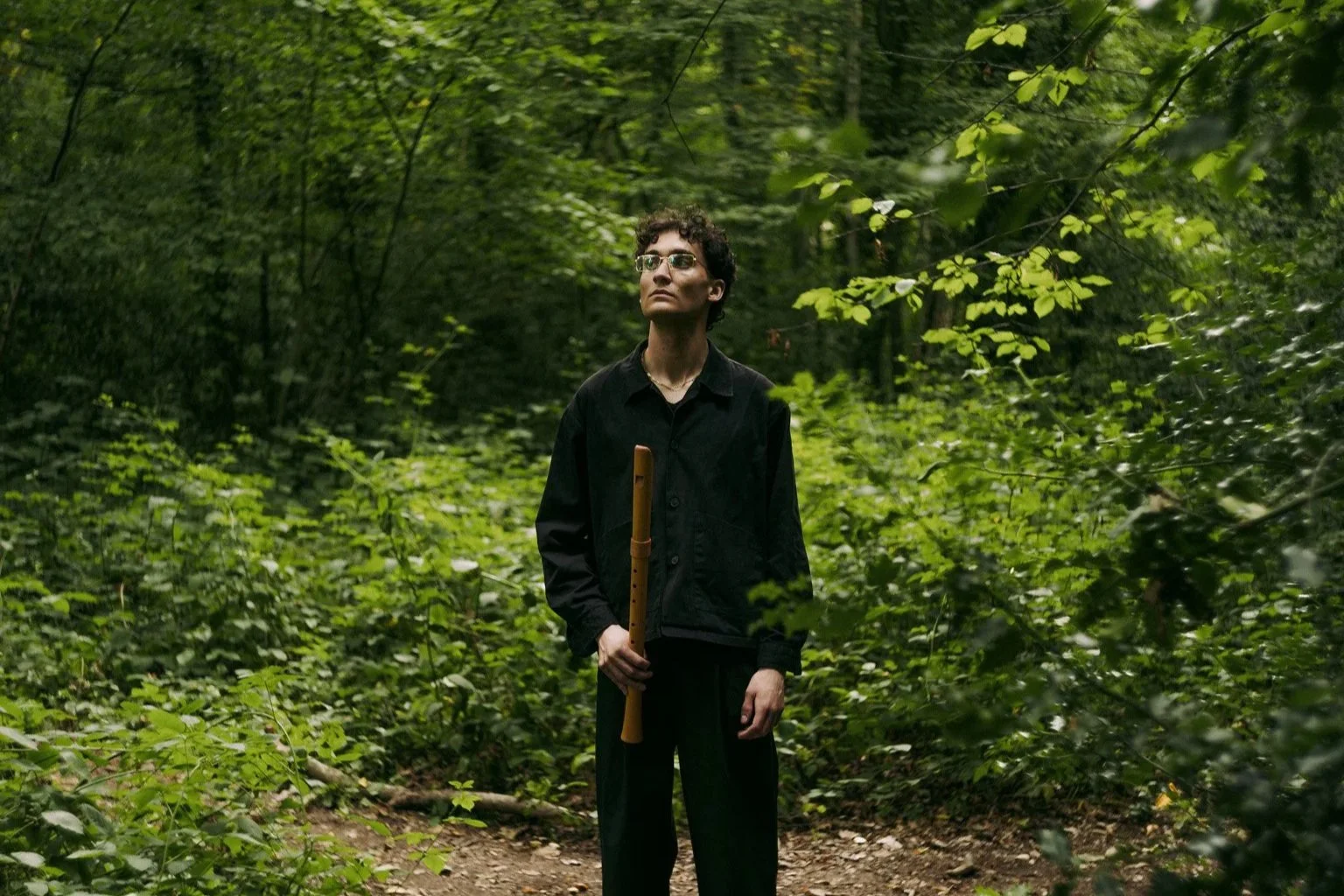
‘two ricercate after giovanni bassano’
SESTA with Leo Chadburn
SETTIMA with Ozgur Kaya
For release 17th August 2026
Through collaboration with Leo Chadburn and Ozgur Kaya, these two historical works by Giovanni Bassano (c.1561-1617) have been reimagined into a sound journey which questions the temporal and the locational.
Where does this music live today?
And what can remain of something so ancient through our modern lens?
‘two ricercate after giovanni bassano’ previews a double A-side from the upcoming long form album project ‘eight ricercate after giovanni bassano’, which sees release on Friday 21st August 2026 on CD and cassette. This will not be available on streaming, embracing the exclusivity and esotericism of a physical medium.
The project was premiered at serpentine.iii 1st birthday on 15th July 2026. Pre-orders will open online on Monday 3rd August and will be supported with a performance at Eastway Baths, Hackney on Saturday 22nd August 2026, where copies will be available for purchase directly.
-
Otto Hashmi is a recorder player and composer from London. Working between classical and popular music, including notably as a live performer for cult experimental band These New Puritans since 2024, his performance has been seen and heard on screen in BBC’s ‘Wolf Hall: The Mirror and the Light’ (2024), and across Anna Meredith’s score for the upcoming ‘Wicker’ (2026) starring Olivia Colman.
His most recent release ‘eight ricercate after giovanni bassano’ is a philosophical deconstruction of the titular historical work, in collaboration with composers including Leo Chadburn and Jocelyn Campbell.
His 2023 EP ‘Music for the End Times’ contrasted sounds of London’s post-covid dance music scene with recorder harmonies of early music, and was followed by UK and EU touring including as support for artist Shabaka.
-
eight ricercate after giovanni bassano explores these groundbreaking works by the eponymous 16th century composer through an exploration of the temporal, the practice, and the narrative of the decaying cold christmas church in hertfordshire.
with the assistance of contributing producers and performers, new context for these works is forged, breathing life into the over 400 year old collection which at once is so deeply connected to modern woodwind performance and yet so far away from the musical world in which we live today.
In 1585, Giovanni Bassano first published his eight ricercate for treble instrument under the extremely catchy title of “Ricercars, passages and cadences to facilitate practicing accomplished diminutions on all kinds of instruments; and also various passages for just the voice”.
This is a landmark work which gives us a remarkable window into the understanding and treatment of solo melodic line in late renaissance. Historically informed performance as a practice teaches us so much about the roots of our contemporary cultural context, yet frustratingly little room for ownership of our performance. Every detail is scrutinised with a demand for historical justification, leading to its performance sounding like a controlled academic experiment, rather than music which continues to live and breathe.
As I grew to know these remarkable works by Bassano, I found myself thinking about:
the temporal - what connections can we find through the performance of Bassano’s work today? And what links, knowledge, and experience has been irrevocably severed from our current era?
the practice - the idea of subverting and reclaiming historical repertoire through a contemporary narrative focused lens. Going against the grain of our conservative historical performance practice, expectations, and performance practice.
the church - I found myself coming back to cold christmas church, hertfordshire, as an allegory for this connection to the historical work. Abandoned and partially demolished in 1853, with the most ancient parts of the structure being founded in the 12th century, the image of this structure simultaneously reclaimed by nature whilst barricaded off by safety fence seemed to me a fascinating parallel to our treatment of historical music and its relevance in modern culture and music making.